

Chosen — Style Guide
THE CODE
A Complete Guide To Classic Black Tie Attire
"A man should look as though he has chosen his clothes with intelligence, put them on with care and then forgotten all about them." — Sir Hardy Amies, Dressmaker for Queen Elizabeth II
Black Tie Guide
The Jacket: Model & Style
Single or Double Breasted — Choosing Your Foundation
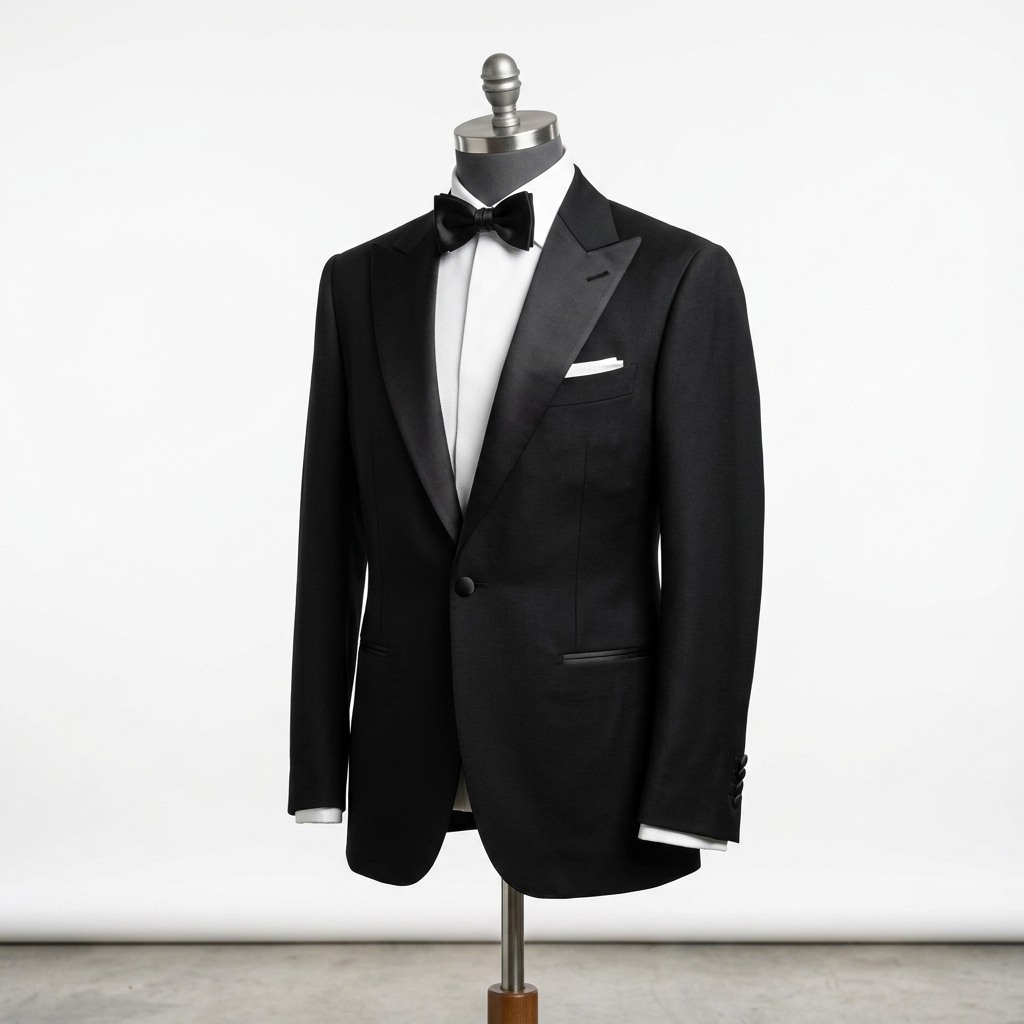
The dinner jacket is the foundation of any black tie ensemble. The model, style, and facings you choose set the tone for the entire look.
The single-breasted model is the original and most formal. It traditionally features just one button, allowing the front to be cut in a deep 'V' that mimics the ideal male silhouette. Because it is often worn unbuttoned, the trousers' waistband should be covered by a cummerbund or waistcoat.
The double-breasted model became popular in the 1930s and is now considered equally correct. It traditionally has four buttons fastening with either the bottom row (4-on-1) or both rows (4-on-2). It looks best when buttoned while standing.
- —Single-breasted: 1 button, deep V front, most traditional
- —Double-breasted: 4 buttons (4-on-1 or 4-on-2), equally correct
- —Always avoid 3-button or modern suit-style configurations for true black tie
💡 Classic Rule: The single-breasted one-button jacket is the most traditional and formal choice. When in doubt, choose single-breasted.
Black Tie Guide
Lapels: The Defining Detail
Peak, Shawl, or Notch — What's Correct?
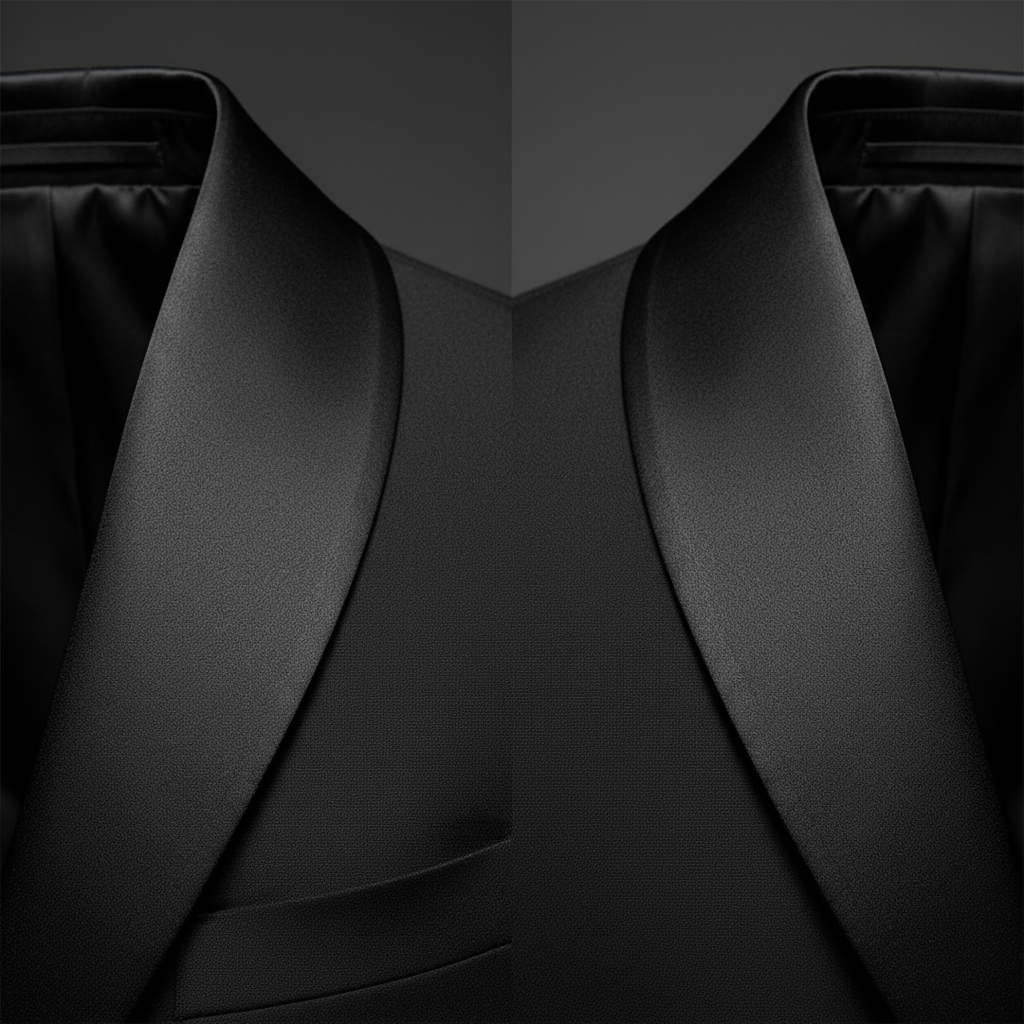
The lapels are perhaps the most distinguishing feature of a tuxedo. Unlike a regular suit, tuxedo lapels are always faced in a contrasting fabric — traditionally black satin or grosgrain — never in the same fabric as the jacket body.
The peaked lapel, derived from the tailcoat, is considered the most formal. Its upward and outward sweep emphasizes height and shoulder width. The shawl collar, influenced by the smoking jacket, conveys a softer, more relaxed elegance and is especially popular on warm-weather jackets.
The notch lapel, while now widely used, is derived from the common lounge suit and is not considered classically correct for formal black tie. It is a contemporary alternative but not recommended.
The facing material — satin or grosgrain — matters too. Satin is shinier and more glamorous; grosgrain has a matte ribbed texture that is considered slightly more conservative and traditionally correct.
- —Peaked lapel: most formal, derived from the tailcoat
- —Shawl collar: equally correct, softer and more relaxed
- —Notch lapel: contemporary alternative, not classically correct and not recommended
- —Facing: satin (shinier) or grosgrain (matte, more traditional)
💡 Classic Rule: Peak lapels or shawl or bib lapels only. The facing material (satin or grosgrain) should always contrast with the jacket body.
Black Tie Guide
Vents & Pockets
Clean Lines Define Evening Wear
The original dinner jackets were made without vents, and no-vent remains the most formal option. Side vents are acceptable and provide practicality. The center (single) vent, a horseback-riding adaptation, is considered incorrect for black tie — it opens when reaching into pockets, exposing the trouser seat.
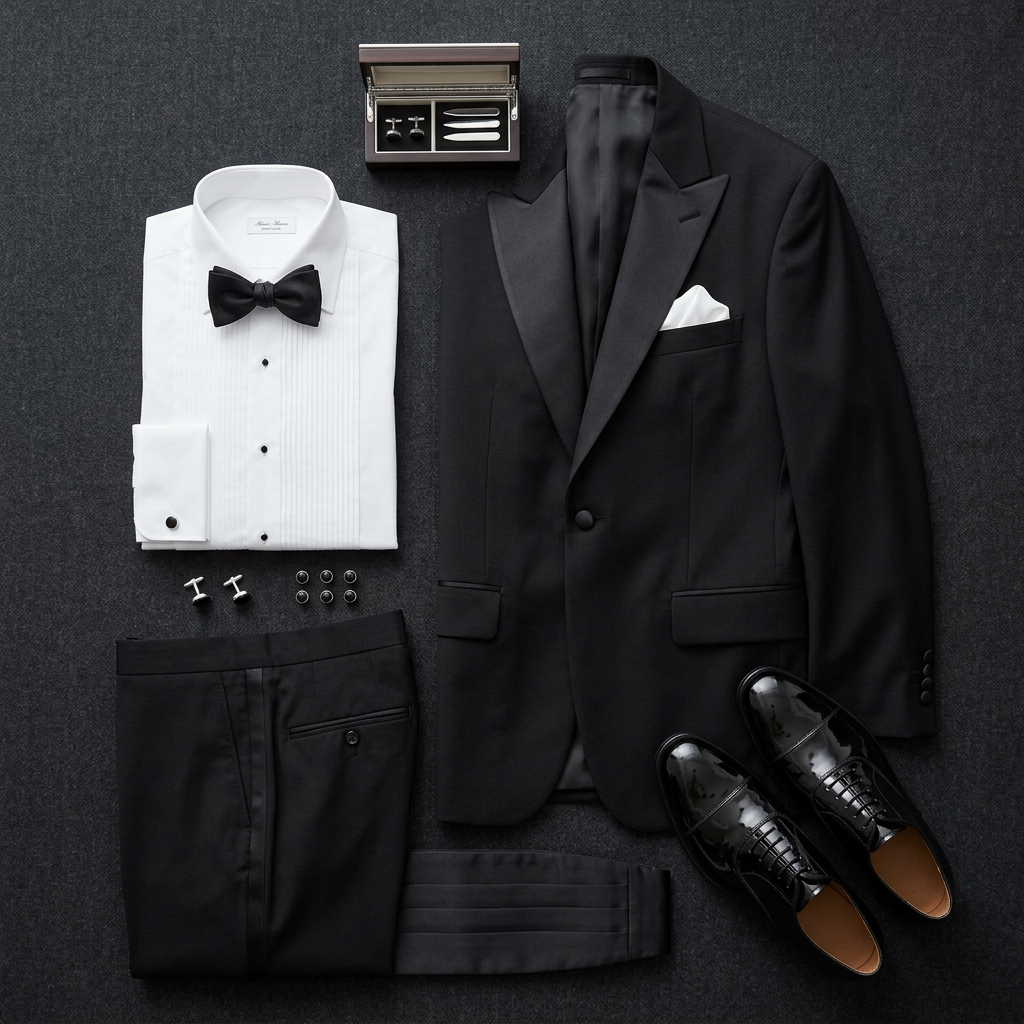
Pocketing follows the same principle of clean, uninterrupted lines. Jetted (welt) pockets — flush with the jacket body — are the only correct choice for black tie. Flap pockets, patch pockets, or ticket pockets are all inappropriate for a true tuxedo. The breast pocket should be a simple welt, ideal for displaying a pocket square.
- —No vents: most formal, cleanest silhouette
- —Side vents: acceptable and practical
- —Center/single vent: incorrect for black tie
- —Jetted (welt) pockets: the only correct hip pocket style
- —Breast pocket: simple welt for pocket square
💡 Classic Rule: No vents or side vents only. Jetted (welt) pockets only — no flaps, no patch pockets.
Black Tie Guide
Fabric & Color
Black, Midnight Blue & the Art of Formal Cloth
The classic tuxedo is black, full stop. The fabric should be a fine worsted wool — ideally a barathea or doeskin weave — that drapes beautifully and holds its structure.
Midnight blue is the one historically accepted alternative to black. Interestingly, midnight blue actually appears darker than black under evening's artificial lighting, making it a sophisticated and equally correct choice. Edward VIII famously championed midnight blue tuxedos in the 1930s.
The key principle is that the cloth should be solid (no patterns, no plaids, no stripes) and in a dark, formal color. A shiny or textured weave can add subtle dimension without detracting from formality.
- —Black: the classic and most widely accepted color
- —Midnight blue: equally correct, appears darker under artificial light
- —Worsted wool: preferred fabric (barathea or doeskin weave)
- —Solid only: no patterns, plaids, or stripes
💡 Style Secret: Under artificial light, midnight blue reads darker than black — making it the ultimate insider choice for serious dressers.
Black Tie Guide
Trousers: The Understated Element
Satin Stripe, No Belt Loops, No Cuffs
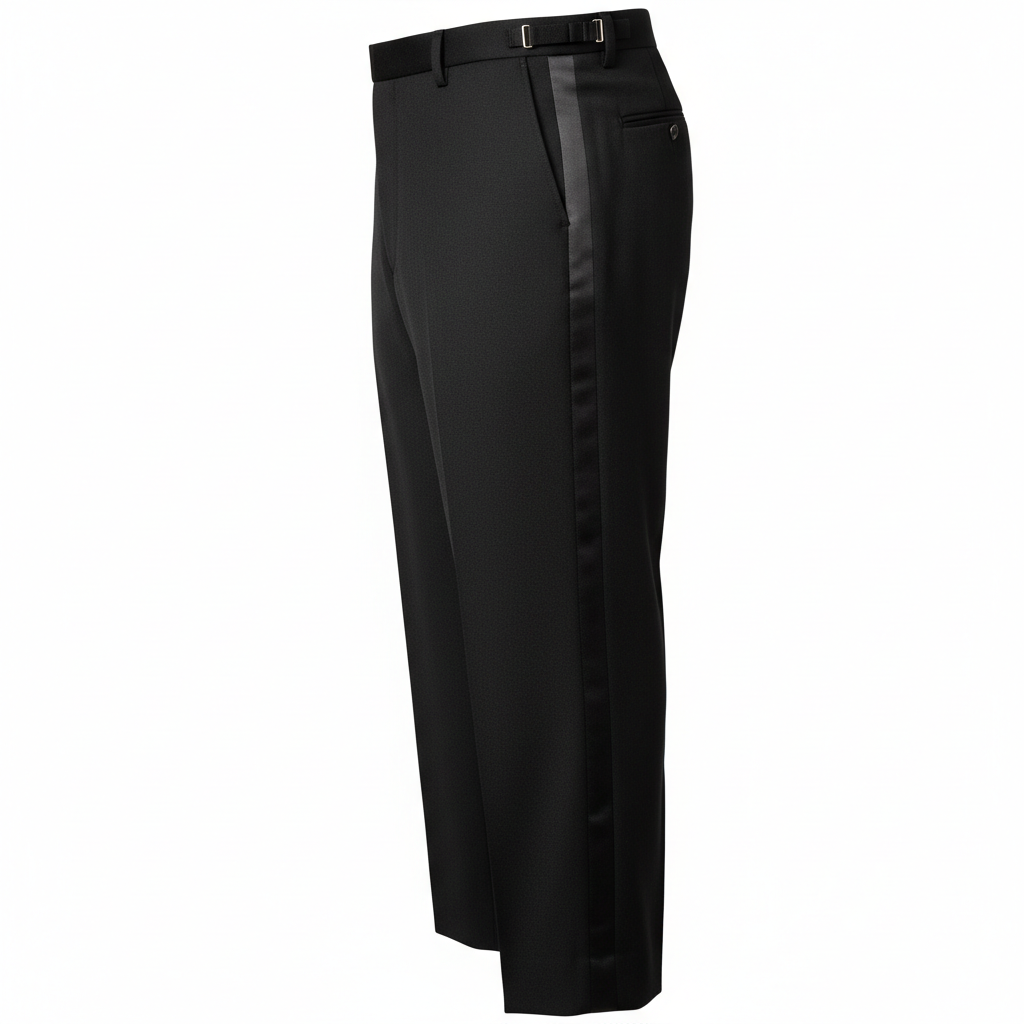
Tuxedo trousers are as distinctive as the jacket itself, though often overlooked. Their most recognizable feature is the satin or grosgrain stripe running down the outseam of each leg — one stripe for single-breasted jackets, sometimes two for double-breasted. This stripe should match the lapel facing material exactly.
Tuxedo trousers should never have belt loops. Instead, they use side adjusters (tabs) or braces (suspenders) for a cleaner, more formal appearance. The trouser break should be minimal — a slight, clean break at the shoe with no excess fabric bunching.
Cuffs (turn-ups) are never worn on tuxedo trousers, as they interrupt the clean vertical line that enhances the formality of the ensemble.
- —Single satin/grosgrain stripe down outseam (matching lapels)
- —No belt loops — use side adjusters or braces
- —No cuffs — clean, uninterrupted trouser leg
- —Minimal break at the shoe
- —High rise preferred for better drape when wearing cummerbund
💡 Classic Rule: One satin stripe down each leg, no belt loops, no cuffs. The stripe must match the lapel facing exactly.
Black Tie Guide
The Formal Shirt
White, Bib Front, French Cuffs — No Exceptions
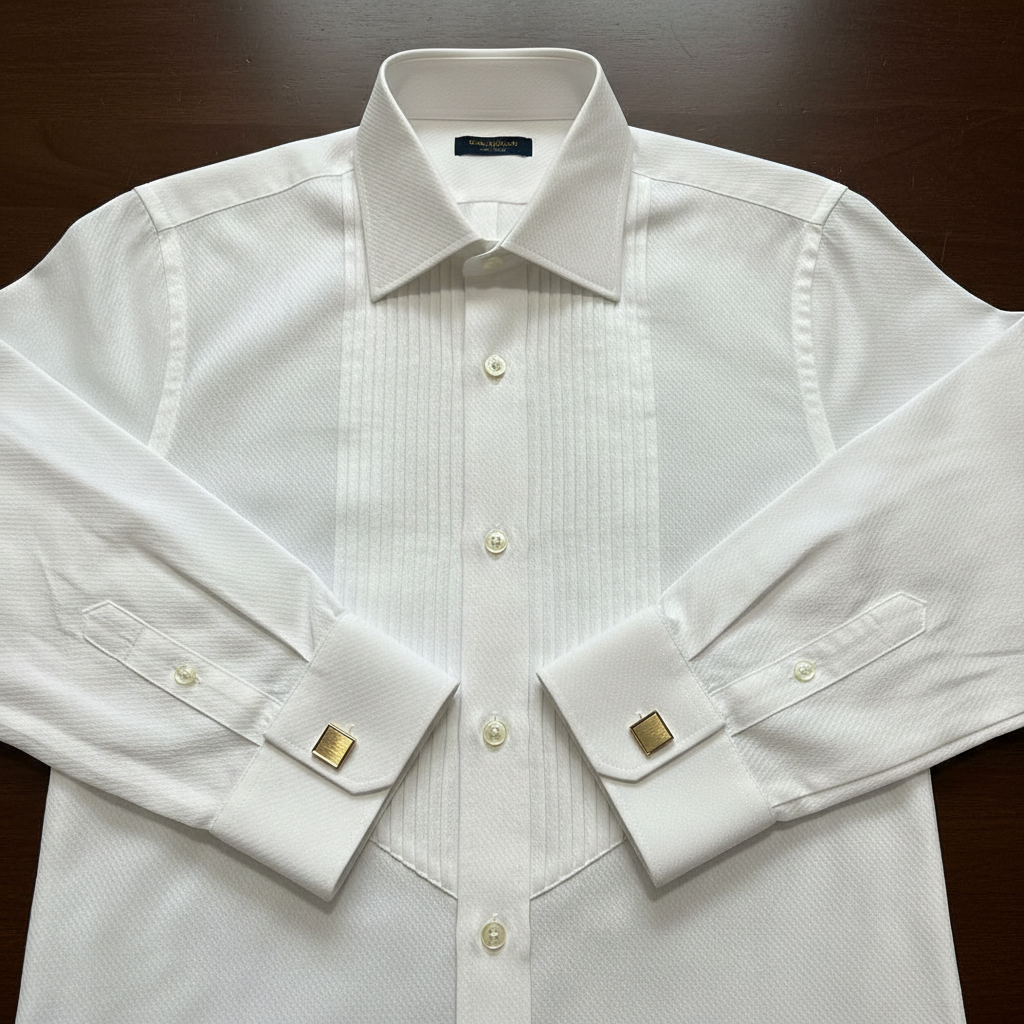
The tuxedo shirt is white — always. It should feature a stiff bib front (the central panel) to conceal the shirt buttons and provide structure. The bib can be made from piqué (a textured cotton weave) or pleated fabric.
The collar is either a turndown collar (for wearing with a bow tie) or a wing collar. Turndown collars are generally preferred by style authorities as wing collars can look fussy and tend to flare outward.
Cuffs must be French (double) cuffs fastened with cufflinks — never barrel cuffs with regular buttons. Studs may replace the shirt's front buttons for an even cleaner look, with the button plaquet hidden beneath the bib.
The shirt should always be tucked in and properly fitted — no billowing fabric or visible gaps.
- —White only — no ivory, cream, or colored shirts
- —Bib front: piqué (textured) or pleated
- —French (double) cuffs with cufflinks always
- —Turndown collar preferred; wing collar acceptable
- —Studs replacing buttons for cleaner look
💡 Classic Rule: White only, piqué or pleated bib front, French cuffs with cufflinks, turndown collar preferred over wing collar.
Black Tie Guide
Neckwear & Waist Covering
Black Bow Tie, Cummerbund or Waistcoat
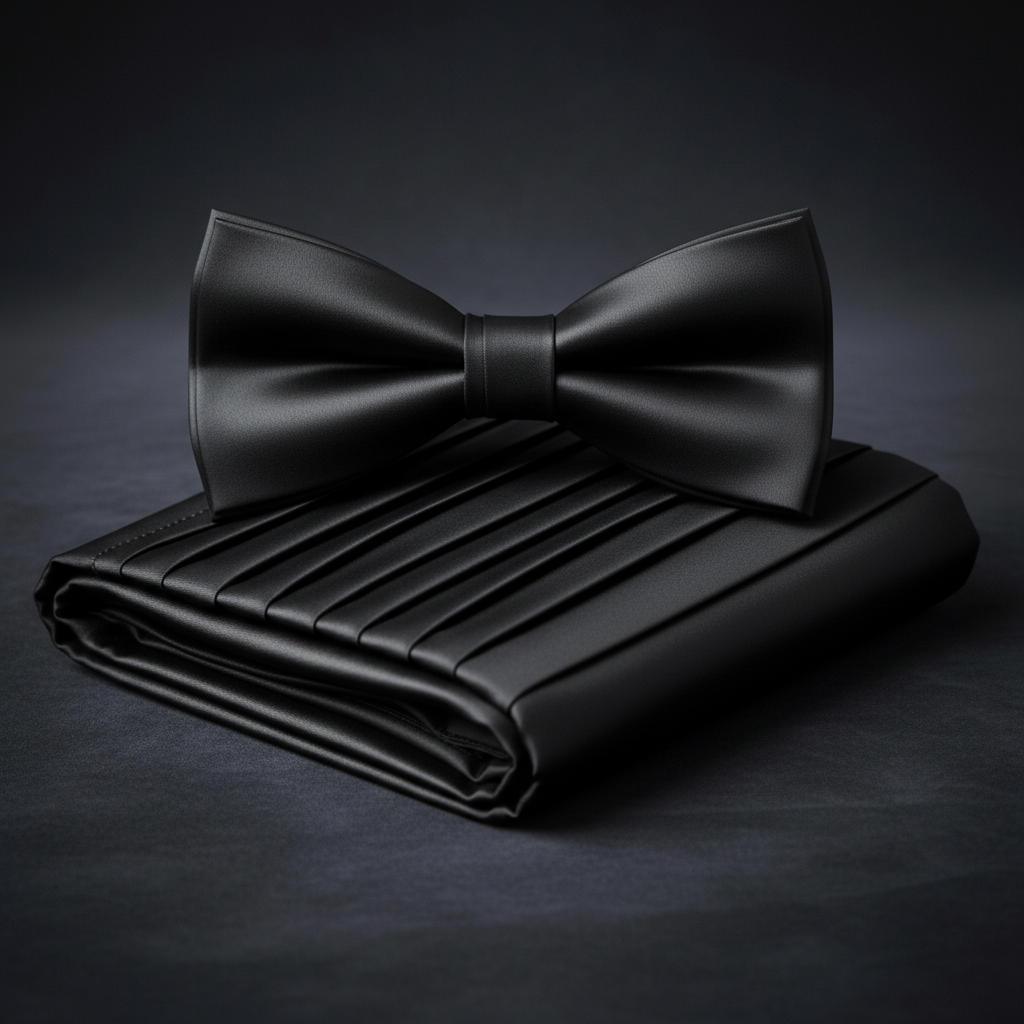
The black bow tie is non-negotiable for classic black tie. It should be self-tied — never pre-tied — and in the same fabric as the lapel facing (black satin or grosgrain). A poorly tied bow tie is always preferable to a perfect clip-on, as the slight imperfection of a hand-tied bow signals authenticity.
For waist covering, the cummerbund is the more traditional choice with a single-breasted jacket. It should be worn with the pleats facing upward (a nod to its origin as a pocket), and should match the lapel facing material. The waistcoat (vest) is a slightly more formal, slightly more archaic alternative — three or five buttons, black fabric or matching the jacket.
Neither a necktie nor an ascot is appropriate for classic black tie, however elegant they may be.
- —Black bow tie only — self-tied, never pre-tied
- —Satin or grosgrain bow tie matching lapel facing
- —Cummerbund: pleats face upward, matches lapel facing
- —Waistcoat (vest): equally correct, slightly more formal
- —No neckties, ascots, or long ties for classic black tie
💡 Remember: Cummerbund pleats always face UP. A hand-tied bow tie with a slight imperfection always beats a perfect clip-on.
Black Tie Guide
Footwear
Patent Leather — The Only Option
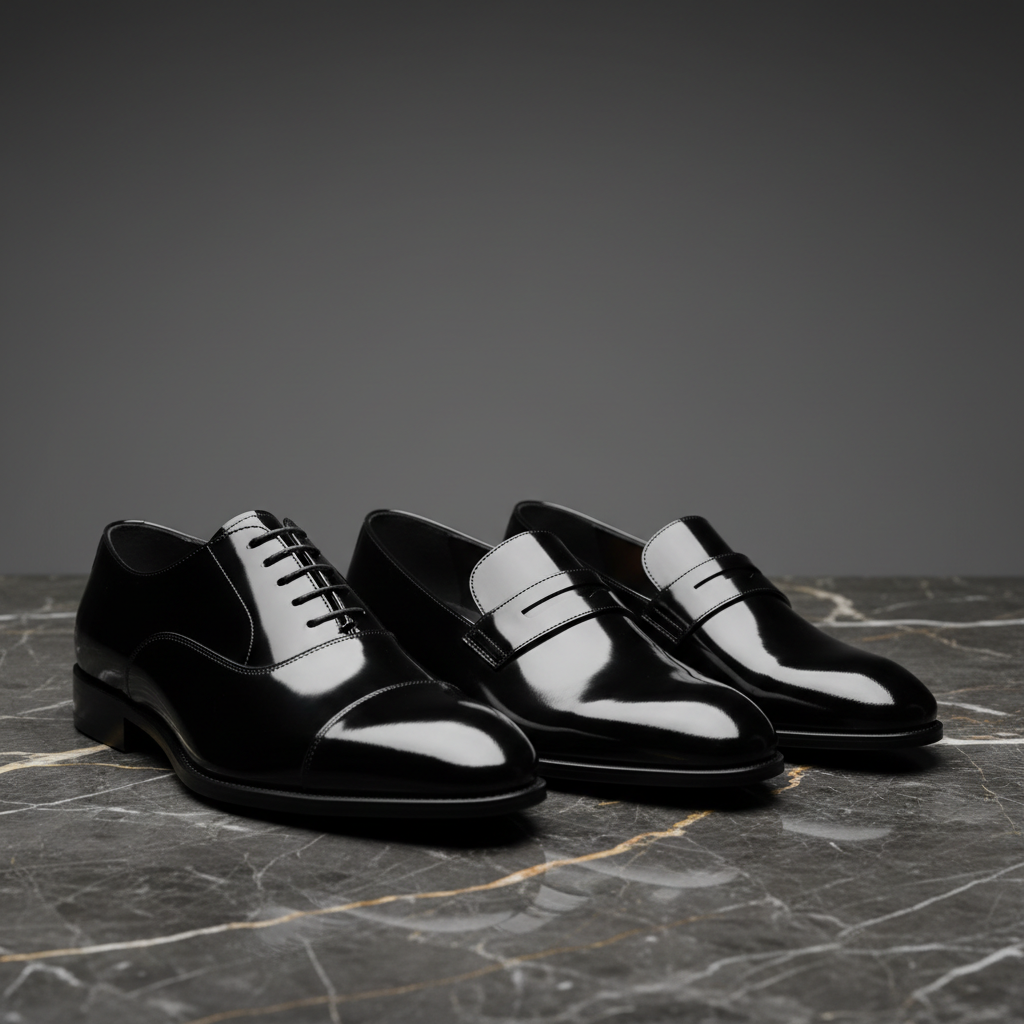
Black tie demands black shoes, and specifically shoes with a high-gloss finish. Patent leather oxfords are the modern standard — their mirror-like shine complements the satin or grosgrain details of the tuxedo beautifully.
Black patent leather pumps (also called court shoes or evening loafers) are actually the original black tie footwear and remain the most formal option. They fell out of favor in the 20th century but are experiencing a revival among serious dressers.
Matte black calfskin oxfords in a very high polish are also acceptable. What is not acceptable: suede shoes, cap-toe brogues, brown shoes of any kind, or any shoe with decorative punching or stitching.
- —Patent leather oxfords: modern standard for black tie
- —Patent leather pumps/loafers: most traditional and formal
- —High-polish black calfskin oxfords: acceptable alternative
- —Black socks only — silk or fine cotton, over-the-calf length
- —No suede, no brown, no broguing, no decorative stitching
💡 Classic Rule: Black patent leather — oxfords for the modern gentleman, pumps for the traditionalist. The higher the shine, the more correct the shoe.
Black Tie Guide
Accessories & Finishing Touches
Less Is More — The Golden Rule of Black Tie
Black tie accessories should be restrained and functional. Cufflinks in silver, gold, or mother-of-pearl are correct — they should be simple and elegant, not conversation pieces. Matching shirt studs (replacing shirt buttons) in the same metal and material as the cufflinks are a refined touch.
A white pocket square in a simple flat or TV fold is the standard — a folded white linen or silk square adds a touch of polish without competing with the overall look. Avoid colorful or patterned pocket squares for classic black tie.
A watch is technically not appropriate for classic black tie (a pocket watch is the historically correct alternative), but a thin, unobtrusive dress watch in precious metal is widely accepted today. Avoid sporty watches, rubber straps, or large case sizes.
- —Cufflinks: silver, gold, or mother-of-pearl — simple and elegant
- —Shirt studs: match cufflinks in metal and material
- —Pocket square: white only, flat fold or TV fold
- —Watch: thin dress watch acceptable; pocket watch traditional
- —No rings beyond wedding band; no tie bars or clips
💡 The Pocket Square Rule: White only. Flat fold or simple TV fold. The goal is a clean sliver of white, not a floral arrangement.
The Black Tie Checklist
Everything You Need to Get It Right
Before your next black tie event, run through this checklist to ensure your ensemble meets the classic standard. Remember: the tuxedo is the only outfit in men's clothing where every element is precisely defined — and that's what makes it so powerful.
Our Recommendation: When in doubt, choose the more conservative option. Classic black tie rewards restraint and punishes excess.
Ready to Build Your Tuxedo?
Start Your Custom Tuxedo
Now that you know the rules, let us help you craft a tuxedo that honors the classic tradition — or breaks it beautifully.
Shop Tuxedo Suits